
Personal and professional webpage
⏣ Curriculum vitae ⏣
I am a physicist who recently obtained my PhD in Chemical Physics from the University of Maryland (Spring 2025). I have experience using numerical methods to study dynamics of Bose-Einstein condensates (BECs) and optical and electronic properties of carbon nanotubes (CNTs) with quantum chemical defects (sp3 defects). CNTs and BECs are both fascinating examples of matter, and I strongly suggest reading up on them if you are interested in science. A BEC is a strange quantum state of matter, wherein a gas of identical bosonic particles are all doing the exact same thing, in the exact same way, in the exact same place! A macroscopic wavefunction, roughly speaking. A CNT is a tube made out of a single layer of graphite which is seamlessly rolled into a cylinder, and has a diameter on the order of 1 nanometer. Roughly speaking, that means you can take a single hair from your head, and lay down 100,000 CNTs across the diameter of that strand of hair!
During the course of my PhD research on fluorescent ultrashort nanotube (FUN) materials, I have developed a Python module ChemG to aid in the generation of designer molecules. You can find the code at https://github.com/beneller/ChemG. I hope to continue developing ChemG as an open source tool for researchers designing and studying nanomaterials, molecular assemblies, clusters and more. It works in a complementary way to traditional molecular generating codes, such as those based on crystal unit cells or GUI-based programs, and allows the user to create, calculate, and visualize structures that would be tedious or impractical to create with existing codes. If you are interested, follow the ChemG repository linked above, and feel free to reach out to me if you want to participate in further development of the package.
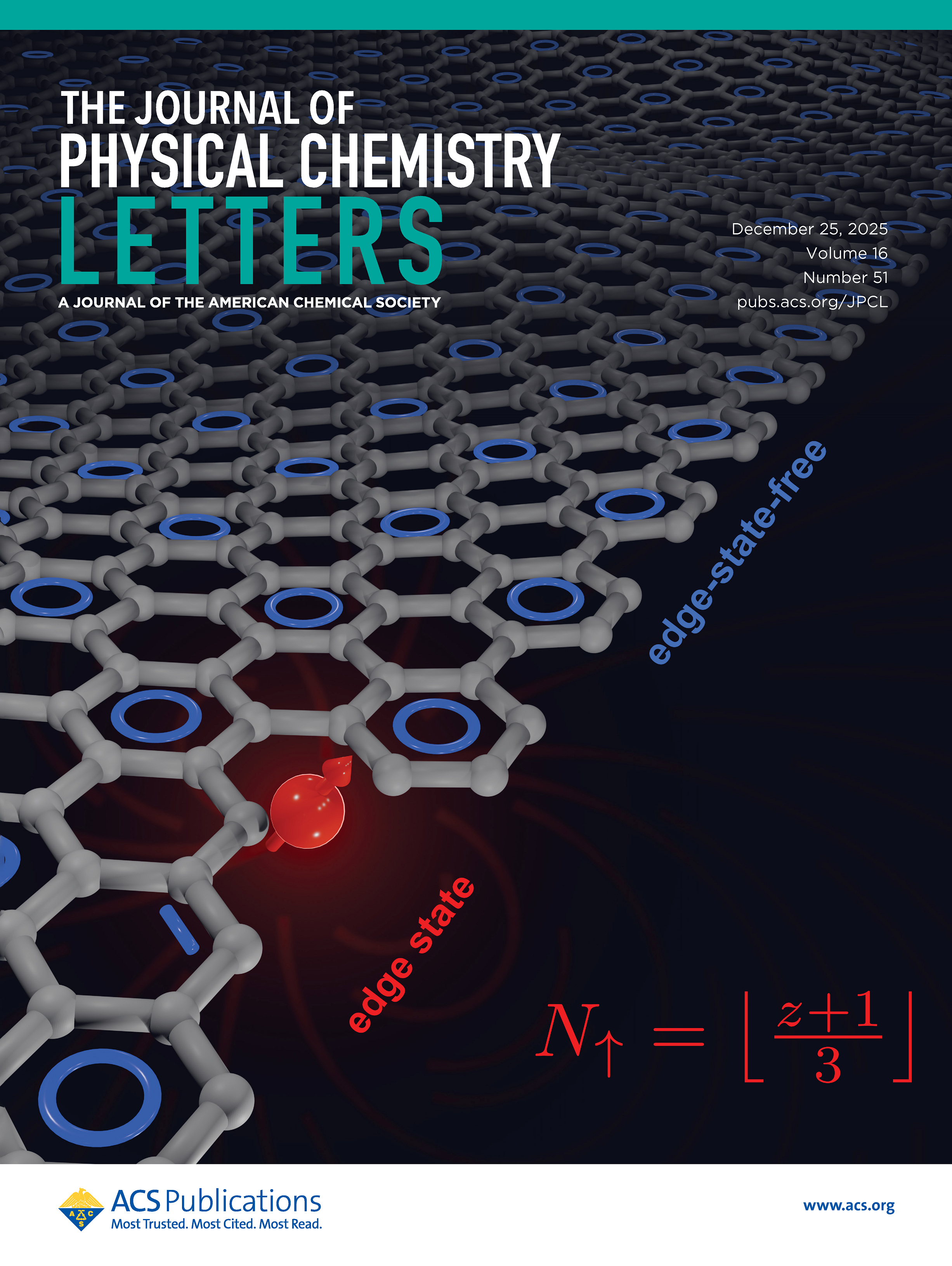
I have used ChemG to aid in the development of a graphic for our article "Clar’s Rule Reveals the Topological Origin of Edge States in π-Conjugated System," which was accepted as the cover story for the 51st issue (12/25/2025) of J. Phys. Chem. Lett. ChemG was used to generate the initial graphene sheet, and then apply a rippling transformation to it to give it a dynamic appearance. Here is the final published version:
In my spare time I enjoy reading, playing soccer and running, trying my hand at art and music, browsing Wikipedia, or just chatting with friends (ideally over delicious food). I might upload some paintings and whatnot here later.
Here are some pdfs:derivation of the Leibniz integral formula
derivation of the Gross-Pitaevskii equation for BECs